Ultimate Guide
to Vertical Material Handling Systems
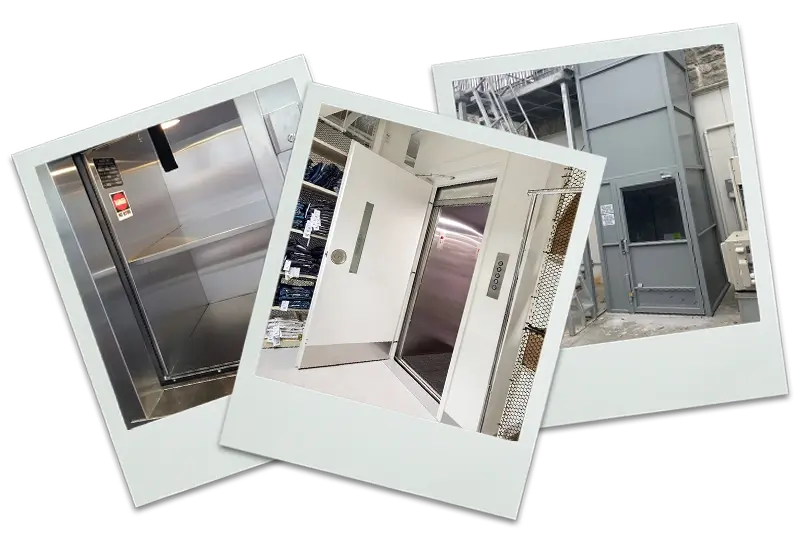
Our vertical material handling line-up makes moving things easy. From dumbwaiters for retail and hospitality applications, to material lifts, vertical reciprocating conveyors for industrial facilities and even highly specialized units for hospitals or hazardous materials, we deliver solutions that meet the rigorous demands of architects, engineers, and specifiers across a wide spectrum of applications. Our ultimate guide is here to help you specify the most efficient and reliable system for your projects.
6 Questions about Vertical Material Handling Systems
- What are vertical material handling systems?
- What is a dumbwaiter lift and who invented it?
- Why should I install a vertical material handling system?
- What is the ROI on dumbwaiters for retail and restaurants?
- What industries use dumbwaiters and material lifts?
- What materials can dumbwaiters and lifts handle?
‘Vertical material handling system’ is an umbrella term that includes dumbwaiters, material lifts, and vertical reciprocating conveyors (VRCs). These systems are designed to move items of various sizes and weights between different floors in primarily commercial or industrial buildings, with some manufacturers also offering residential units. They typically require less space than a full freight elevator, and provide a reliable way to transport food, laundry, office supplies, retail stock, even medical carts or hazardous materials without tying up passenger elevators or requiring staff to carry loads manually.
Did you know that the only thing you cannot transport in a vertical material handling system under building code is a living human being?
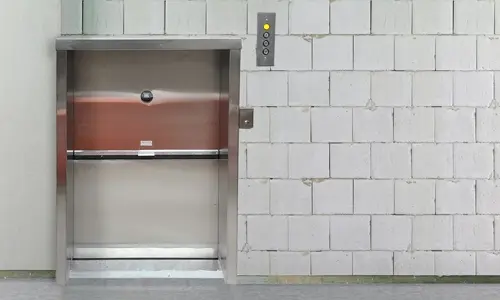

A dumbwaiter is a small freight elevator designed to carry goods, not people, between floors. While there is some debate about its origins, most historians credit Thomas Jefferson with popularizing the concept in the late 1700s. He used dumbwaiters in his home to discreetly transport food and drink during state dinners, reducing the need for servants and minimizing the risk of overheard conversations and slipped secrets.
That’s where the term “dumb” “waiter” originates: a server who cannot speak.
There are several compelling reasons to install vertical material handling solutions. First, they make the most efficient use of expensive commercial space by allowing kitchens, prep areas, storage rooms or secured restricted-access storerooms to be located in less costly basement areas. This frees up premium floor space for customer-facing activities such as dining or retail sales.
They also improve efficiency by reducing delivery times, preventing workplace injuries, and ensuring passenger elevators and lifts remain available for people rather than goods. In applications such as medical facilities, some manufacturing plants, oil and gas and hazardous materials, they are also used to prevent cross-contamination and exposure.
Compared to freight elevators, these systems are more compact and typically 40 to 60% less expensive to install, making them a cost-effective solution that can work hard for more than 25 years before modernization is usually needed.
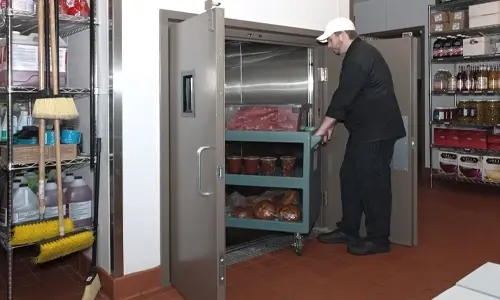
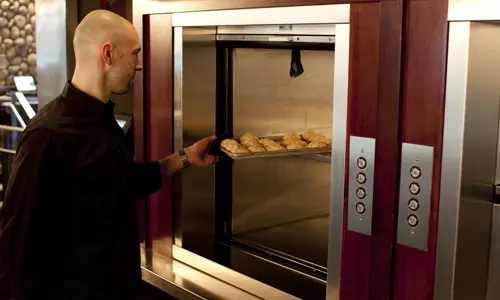
If we look at the annual cost of prime restaurant/retail space, in a major urban center that typically runs to an average between $50 and $700 per square foot (sq ft) a year. In more expensive locations like Upper Fifth Avenue in NYC, street-level leases can run as much as $2000/sq ft.
Most restaurants allot 60% of their space to front-of-house, and 40% to back-of-house food prep and storage. A typical mid-sized restaurant may seat about 75-80 people and requires roughly 15-30 sq ft per person for the dining area. That works out to 1125-2400 sq ft for front of house, and 750-1600 for back-of-house operations.
The annual cost of below-ground space in most locations is typically 50-80% less than street level, so between $10-350/sq ft in a major city, or as much as $400-1000/sq ft on Upper Fifth.
Putting food preparation, and other back-of-house operations below ground can save anywhere from $30,000 to $560,000 a year in lease costs alone.
A small, two-stop dumbwaiter suitable for these applications starts at around $50,000 USD (installed) in most markets. The ROI is clear, and the payback almost immediate.
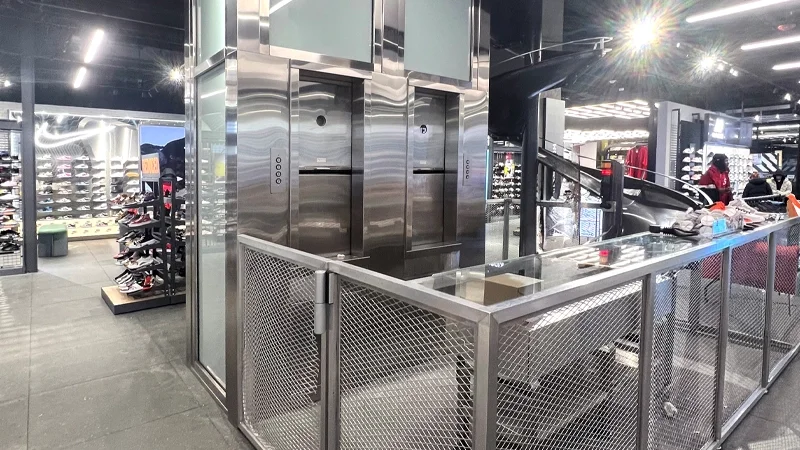
You will find these systems in a wide variety of settings. Restaurants and hotels use them to streamline food and beverage service. Hospitals and healthcare facilities rely on them to move sterile and soiled materials without cross-contamination. Retailers use material lifts to move stock efficiently between storage and sales floors. Libraries, museums, pharmacies, schools, and airports are also frequent users of vertical material handling systems, since they allow safe and organized transport of materials without disrupting public areas.
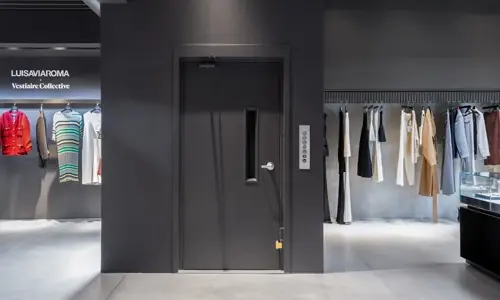
The range of materials that can be moved is extensive. Some of the more common applications include:
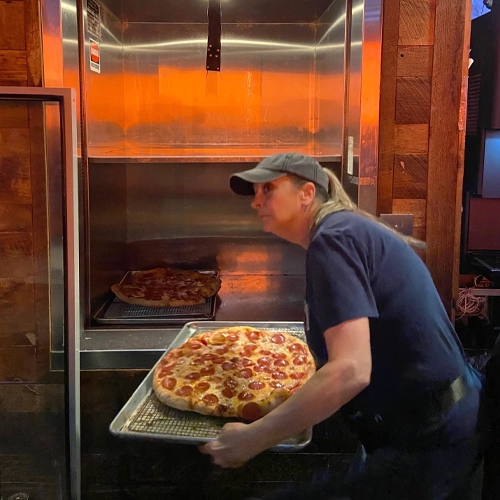
Dumbwaiters carry food, beverages, and tableware. Retailers can move stock and packaging materials, while laboratories may use them for secure transport of chemicals or pharmaceuticals.
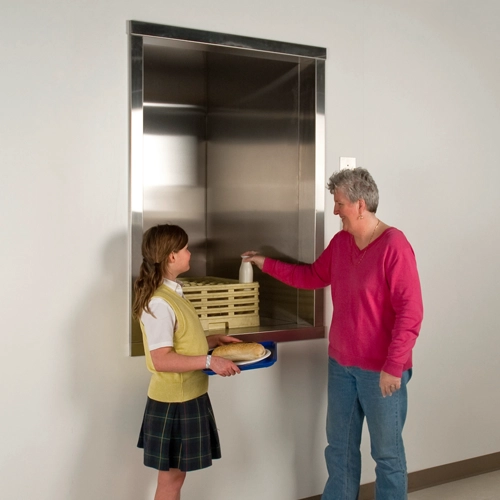
They might move mail, supplies or files.
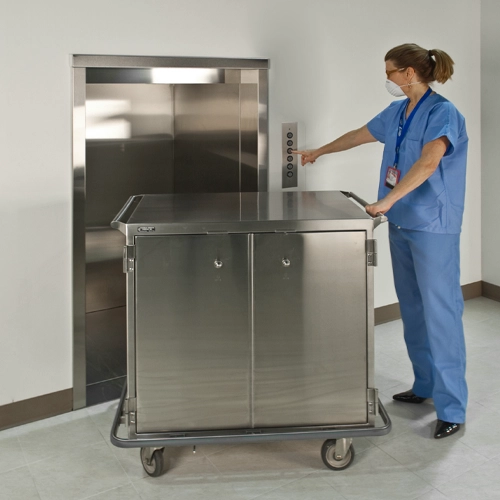
Often rely on cart lifts for sterile surgical instruments or soiled linens, food service, distribution of medications to different wards, and so forth.

Use them to bring controlled medications from storage to dispensary on an as-needed basis to increase security.
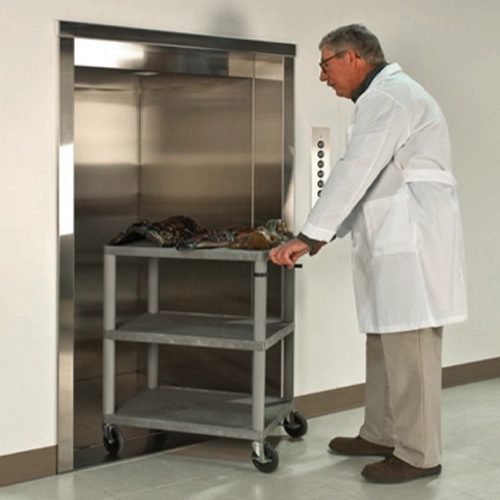
Use them to transport delicate artifacts safely.
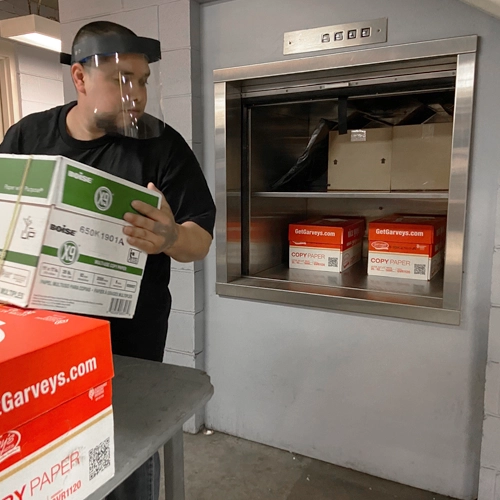
Use them to move components, parts and finished products throughout the production or storage facility.
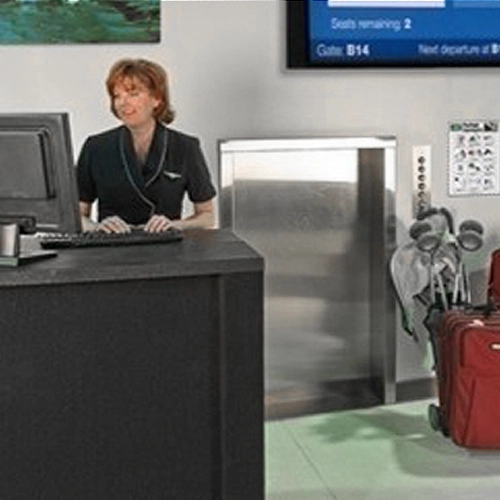
Use them to move luggage, for food service and concourse restaurants and retail.
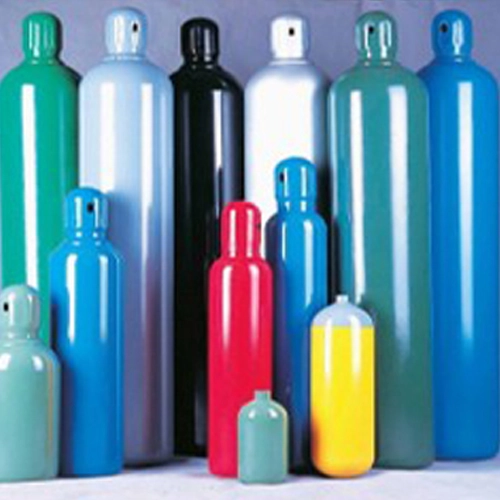
Can be transported securely with the right system. There are even fire- and explosion-resistant units for industries like oil and gas, chemical manufacturing and so on.
How do I choose the right system?
Choosing the right system starts with three basic questions:
What are you moving? How do you want to move it? Where are you moving it?
The answers will help determine the system’s size, capacity, and loading style. For example, a restaurant moving trays of food between floors may need only a compact dumbwaiter, while a warehouse moving heavy pallets might require a VRC.
It’s important not to over-specify by adding capacity or speed that isn’t required, since this only increases cost without delivering extra value.
Components of Vertical Material Handling Systems
- Car
- Gate
- Guide system
- Door
- Electrical controller/motion control
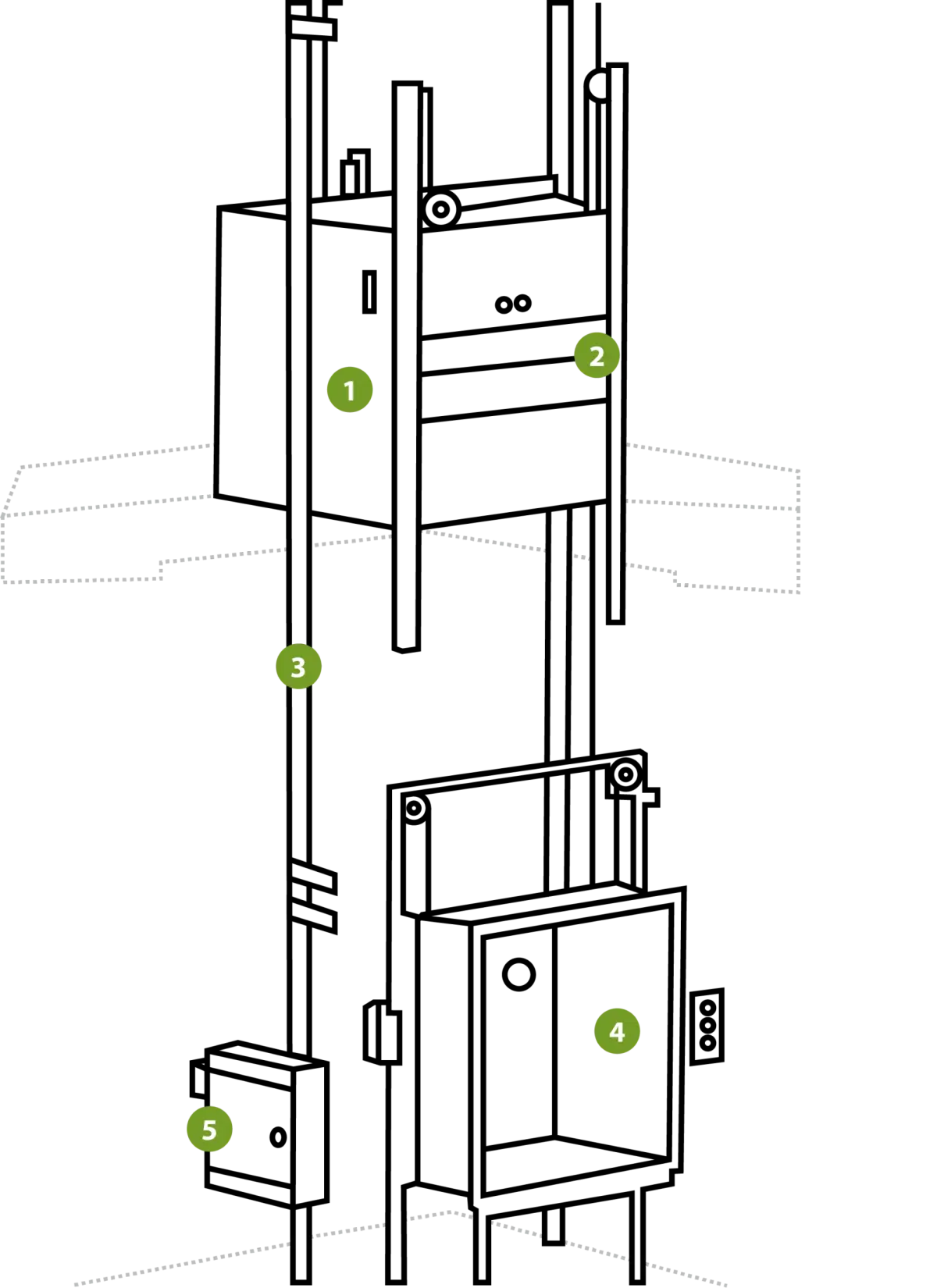
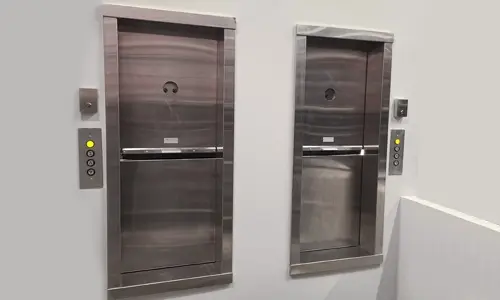
The governing codes for dumbwaiters are ASME 17.1 and CSA B-44. Non-residential dumbwaiters offer a maximum platform area of 1560 sq in (width x depth) and the height is limited to 48".
Capacity on a dumbwaiter is usually in the 100 - 500 lb (45.5 - 226.8 kg) area, with a maximum capacity allowed by code of 750 lb (340 kg). Matching the platform size with the capacity is also important. The code requires a minimum of 13.9 lb per cubic ft (222.66 kg per cubic m).
Dumbwaiters must be housed in a shaftway, and are usually enclosed within a drywall or masonry, fire-rated shaft and equipped with fire-rated hoistway entrances.
These units may be floor-loading or counter-loading models, and available in three opening configurations: single side, opposite sides/straight-through, adjacent side/90-degree. They are capable of multiple stops and come with either power-operated or manual car doors.
Dumbwaiters excel at moving smaller loads in buildings where space is at a premium.
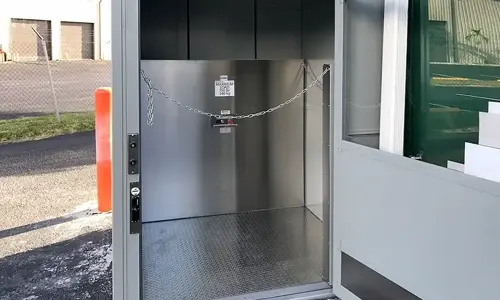
The governing codes for material lifts are ASME 17.1 and CSA B-44. Platform size can be up to 48" wide, 96" high, with no depth restriction.
Capacity on these units is usually 750-2500 lb (340-907 kg), and the code requires a minimum of 50 lb per sq ft of platform (244 kg per sq m).
Like with dumbwaiters, material lifts are usually enclosed within a fire-rated shaft and equipped with fire-rated hoistway entrances.
These units are available in single side, opposite sides/straight-through, adjacent side/90-degree opening configurations, and may be floor-loading or counter-loading. They are capable of multiple stops and come with either power-operated or manual car doors.
Matot Material lifts and the M-1504 Material lift are suitable for commercial and light industrial applications with larger cargo requirements.
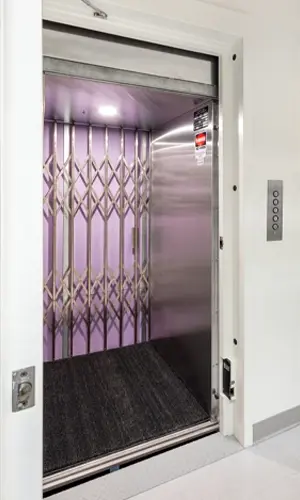
The governing code for VRCs is ASME B20.1 Safety Standard for Conveyors. There are no size limits or capacity restrictions by code for VRCs, but most manufacturers, including Matot VRCs by Savaria, max out at a 60" x 86" platform and a 2500 lb capacity.
The type of shaftway used for VRCs depends on the application. For commercial applications, the VRC is usually contained within a fire-rated shaft with fire-rated hoistway entrances. For industrial applications, it’s more typical to see the unit protected by sheet metal barriers which have no fire rating.
Vertical reciprocating conveyors are capable of multiple stops and come with either power-operated or manual car doors, may be counter-loading or floor-loading (more typical) and configured for single side, opposite sides/straight-through, adjacent side/90-degree openings.
VRCs can also be designed to interface with load/unload conveyor systems.
These units are best suited for light industrial applications with no size, rise, speed or capacity restrictions, as well as open industrial areas, hoisting product from a lower-level shop floor to upper-level mezzanines.
It’s important to note that while a Vertical Reciprocating Conveyor can be utilized in either commercial or industrial applications, it cannot be exposed to or used by the general public. That means placement within the building footprint and traffic flow are important considerations when specifying a VRC.
Want to see the differences between our vertical handling products at a glance?
Check out the comparison table.
What types of drive systems are available?
There are two main types of drive system: winding drum and geared traction.
Winding drum is used on about 60% of vertical material handling units, whether dumbwaiter, material lift or vertical reciprocating conveyor (VRC). In a winding drum drive, a cable drum wraps and unwraps the hoist rope on a cylindrical steel drum with cable grooves to raise or lower the car. Think of it as being similar to a fishing casting reel which winds or unwinds the fishing line, but with a counterweight and buffer.
Winding drum is commonly used for low- to medium-rise applications requiring low- to medium travel speed. It is the least expensive drive system and offers incredible reliability, but it has capacity and travel distance limits.
Drum machines can be mounted at the top, bottom or adjacent to the shaft on upper or lower floors. Placement of the drive will impact overall pit depth, overhead or shaftway dimensions, so it’s important to determine this placement early in the design phase of the project.
Installation is simple and quick, and rails typically span up to 12 feet between bracket fastening points.
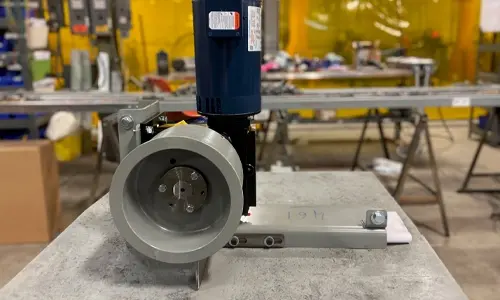
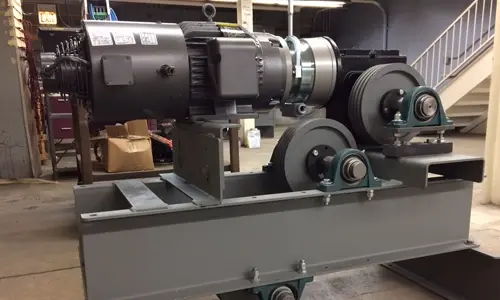
For applications requiring higher travel speeds, greater travel distances, or higher capacities, the geared traction drive is a robust, reliable machine, even in demanding environments.
With a geared traction drive system, the car is pulled up by means of rolling steel ropes over a deeply grooved pulley, commonly called a “sheave”, and the weight of the car is balanced by a counterweight. About 40% of vertical material handling systems use this type of drive.
If you're unsure which drive system you need, your Savaria Matot expert will be happy to discuss your project specifics and help select the appropriate drive for your application.
Should I specify floor-loading or counter-loading?
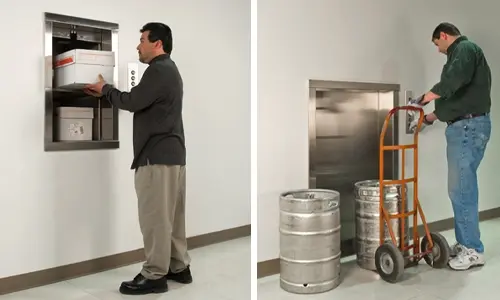
Counter-loading units are best for hand-loading materials, as they stop at counter height. They work well for smaller loads, or for loads comprised of multiple, lighter-weight pieces. They are very popular in applications like restaurants, as upper-level openings can be aligned with the bar and server stations.
Floor-loading units are preferred for transporting carts, wheeled trucks, or heavier items loaded using a dolly or lift truck.
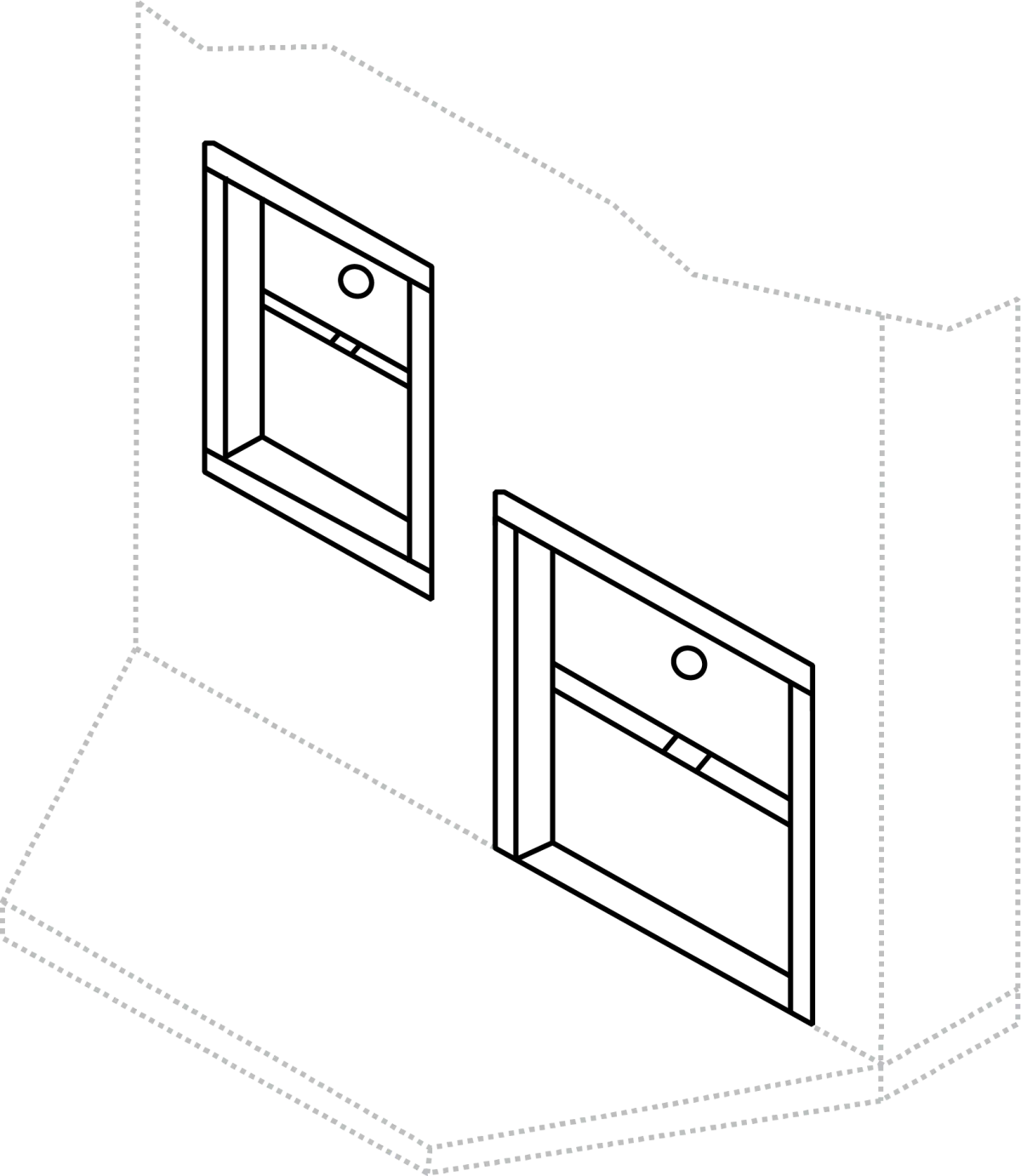
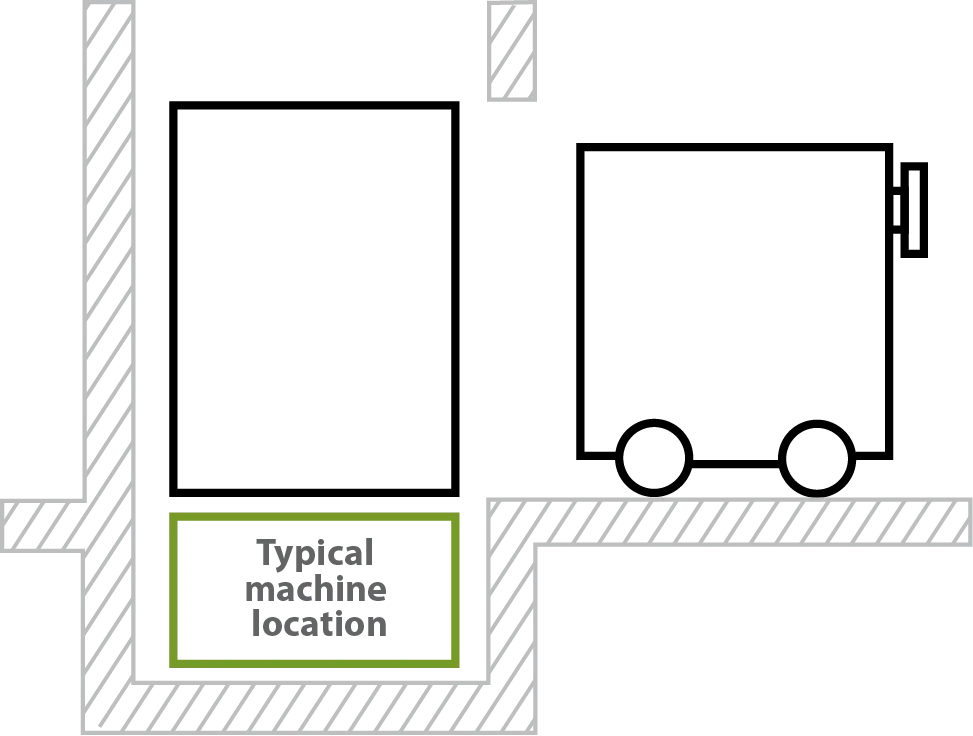
The pit requirement for floor loading lifts might need special design consideration—particularly where the dumbwaiter is a retrofit in an existing building or where there are floors below the dumbwaiter shaft—as the machine room for these units is typically housed in the pit. Floor-loading units can often accommodate the machine room in the overhead, because floor-loading units require a pit.
If you're unsure which configuration you need, your Savaria Matot expert will be happy to discuss your project specifics and help define your material handling solution.
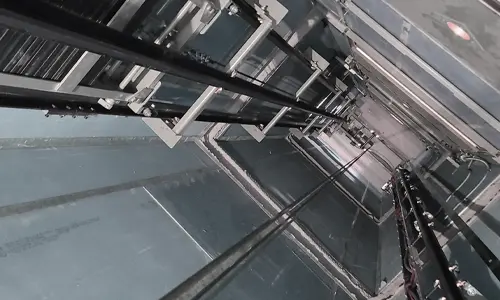
The ideal flight time between terminal landings is under 30-40 seconds. So, for a unit traveling 3-4 stories or less, the speed is typically 50 feet per minute (FPM).
Higher speeds may be required above 4 floors.
The travel distance and required speed may impact your choice of drive system. It is important to define these parameters and specify a right-sized solution for your project.
What are the space requirements?
What are the space requirements for a dumbwaiter?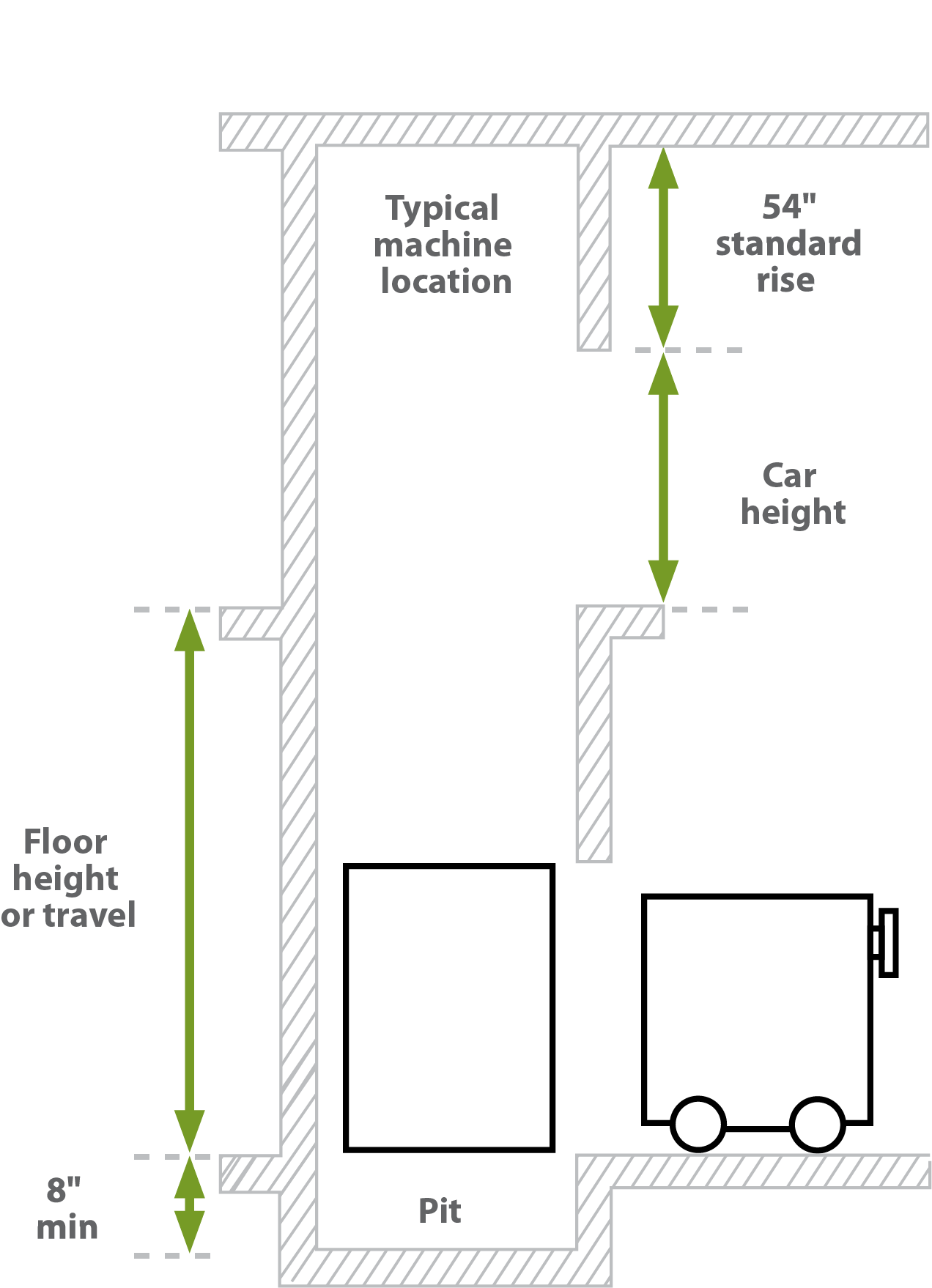
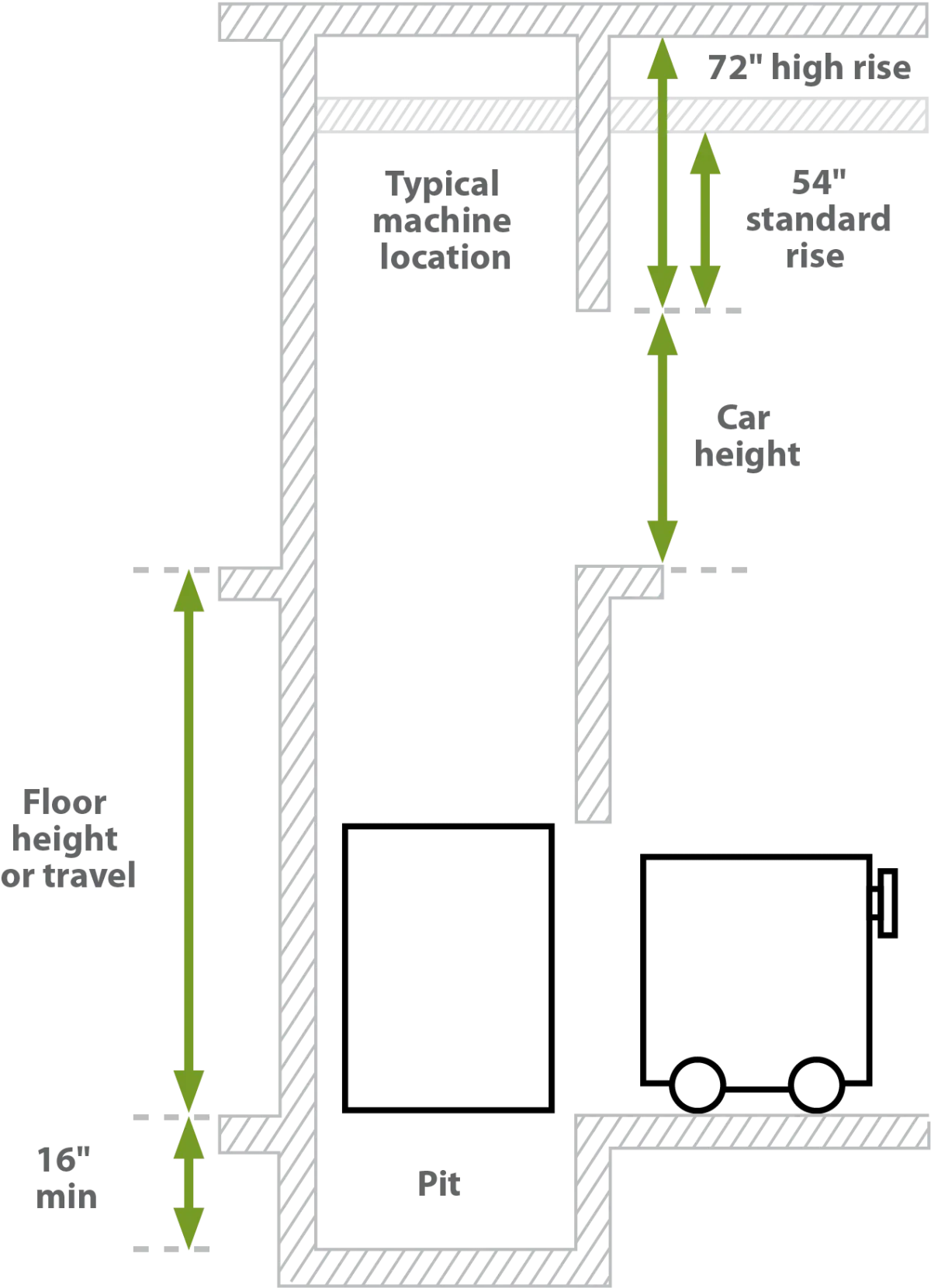
A lot will depend on the car size specified! For floor-loading, standard rise, standard speed and drum units with the drive housed in the overhead, you’ll need a minimum pit depth of 8" (30" preferred), and an overhead of 54" plus the car height.
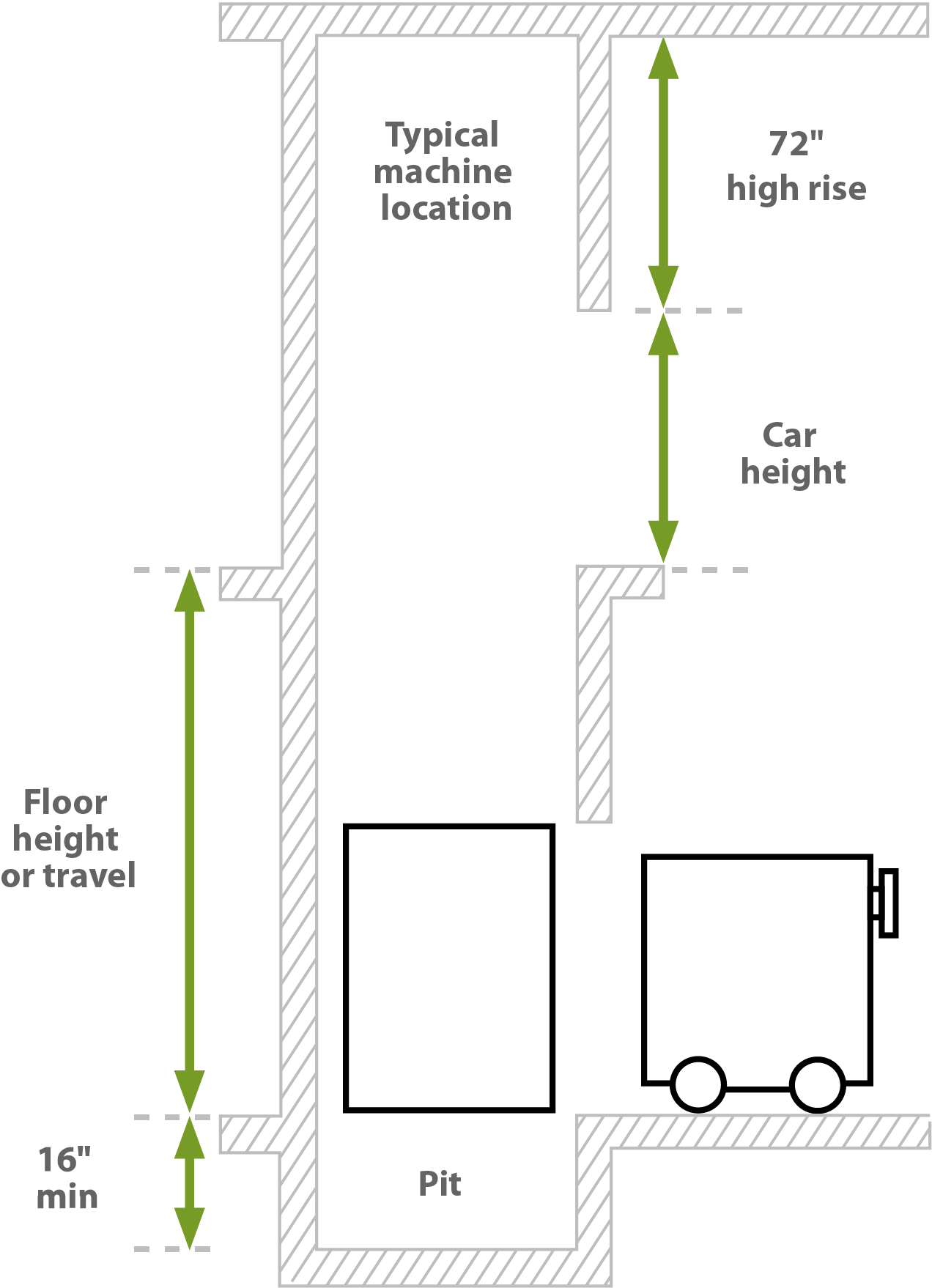
For floor-loading, high-rise (over 75'), high-speed (over 75 fpm) and traction drive units with the drive positioned in the overhead, you will need a pit depth of 16" (min) to 30" and an overhead of 72" plus the car height.

For counter-loading standard rise, standard speed and drum units with the drive housed in the pit, you’ll need to calculate the sill and floor height to find your pit depth, and an overhead of 42" plus the car height.
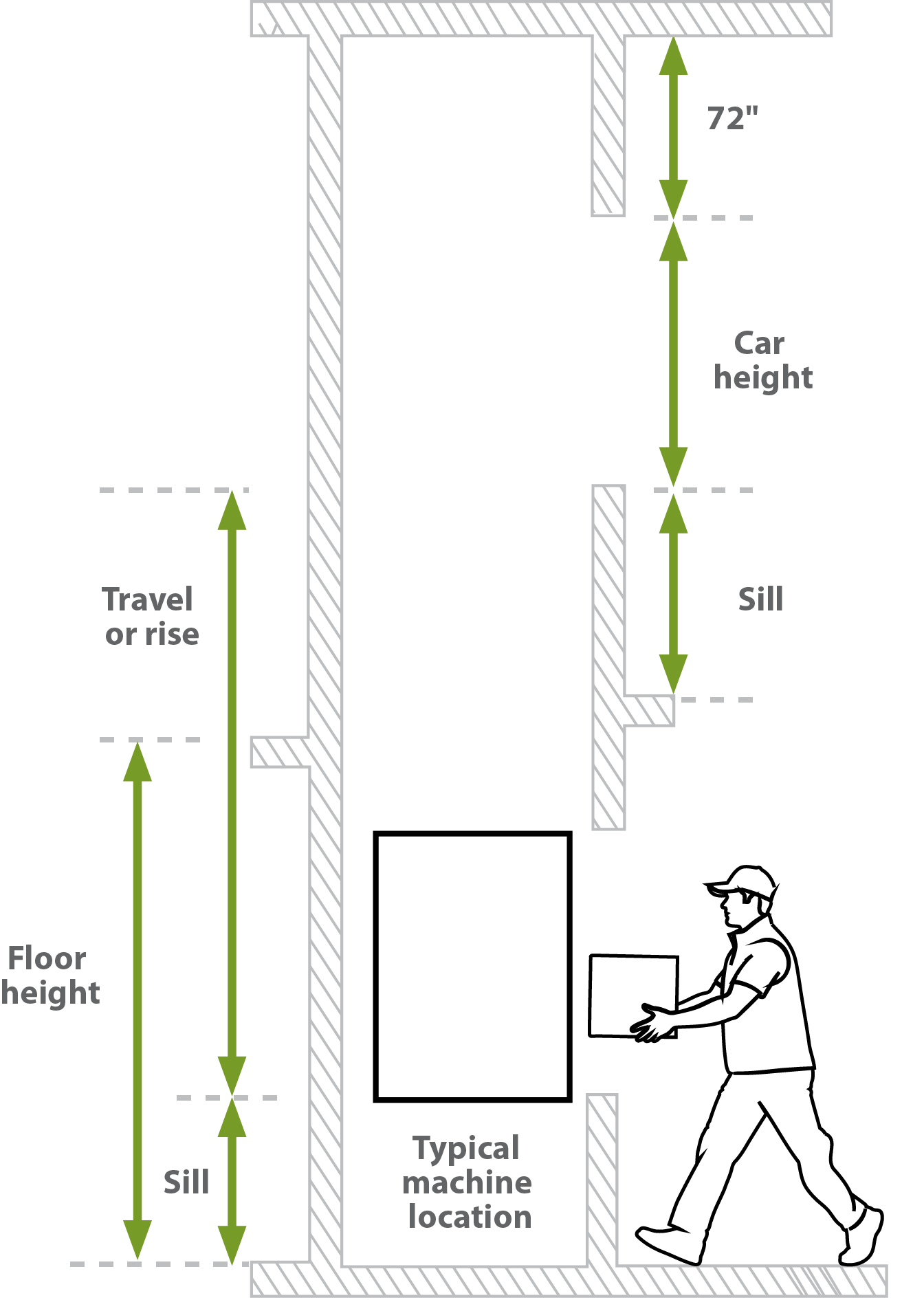
For a counter-loading configuration of the same unit, with the drive positioned in the pit, calculate the required pit depth by the sill plus floor height, and the overhead by adding the sill and car height, plus 72".
Floor-loading standard-rise
For floor-loading, standard-rise, standard-speed and drum units, with the drive positioned in the overhead, you’ll need a minimum pit of 16" (48" preferred) and an overhead of 54" plus the car height.
Floor-loading high-rise
For floor-loading, high-rise (over 60'), high-speed (over 75 fpm) and traction drive units with the drive located in the overhead, you’ll need a minimum pit depth of 16" (48" preferred) and an overhead of 72" plus the car height.
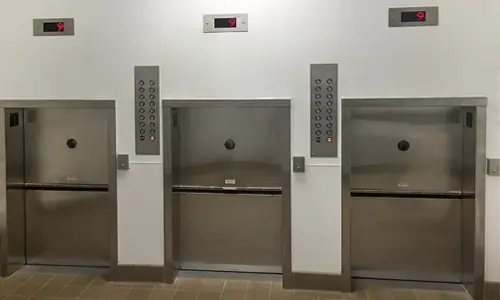
Because there are so many variations in size and configuration for VRCs, we recommend an early design stage consult with your vertical material handling expert to define the system first, which will dictate all other space considerations on the project.
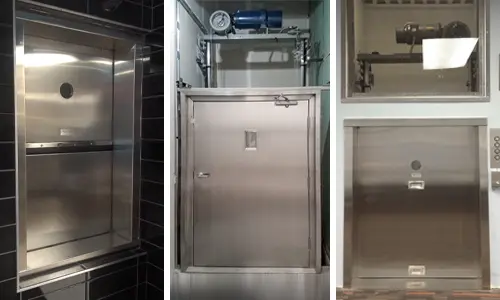
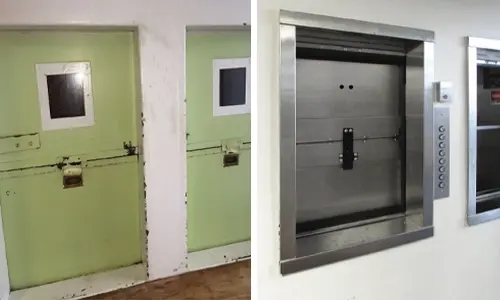
Standard units typically use manually operated vertical bi-parting, slide up, slide down and swing type UL Fire Rated doors. Power operated doors and gates are motorized so they open and close automatically with the push of a button.
Doors include UL listed door locks, or an optional upgrade to integrated key locks, keypads and interfaces to external security systems.

- Speeds up to 200 feet/minute
- Lifting distances up to 300 feet
- Designated clean and soiled units
- Self-supporting tower: Structure consisting of four corner angles rigidly braced to support unit and avoid imposing loads except at base
- Power operated doors and gates that open and close automatically with the push of a button
- Variable frequency and vector-based drive systems for incredibly smooth travel and ultra precise stopping and starting
On average, a vertical material handling system should be modernized about every 25 years. Modernization often includes upgrading control systems, motors, safety devices, and doors to bring the unit up to current technology and code.
Many units that appear obsolete can be restored to reliable service. Older dumbwaiters and conveyors can often be upgraded with new motors, programmable logic controllers, or modern door systems. In some cases, entire car enclosures may be replaced while reusing the existing shaft. Restoration allows facilities to extend the usefulness of their existing equipment while meeting today’s safety and code requirements, often at a fraction of the cost of a full replacement.
Yes, Savaria is a registered provider of AIA-approved continuing education (Provider Number 40107405), and our course Vertical Material Handling Systems & Methods (AIASAV40x) is a perfect introduction to the subject.
This course explores the various types of vertical material handling systems that are available; what kinds of end users and buildings reap the most benefits; and the wide range of objects that are transported vertically, between the floors of any structure. National code applications are also discussed.
Click here to request an in-person or virtual lunch and learn presentation of this course for your firm.
Ready to get started?
Get a free design consult on your project with your Savaria expert.